


Before calling it fulfilled
A fulfilled prediction can give a reason to take a claim of revelation seriously. Its force depends on three things: good evidence that the prediction came first, wording specific enough to risk being wrong, and evidence that the predicted event actually happened. We must then ask whether ordinary foresight, a flexible interpretation or a story shaped by the prediction explains the match. These tests apply equally to the Qur’an and the Bible.
The same event can answer one question without answering another. A manuscript can show that a passage existed before Jesus; it cannot, by its age alone, show that the passage refers to Jesus. A Roman victory can confirm a historical reversal; it cannot, by itself, establish when someone first predicted it. Keeping these questions apart lets an impressive example become an argument we can examine.
The Romans: a real prediction claim
Qur’an 30:2–4 says, in its standard Arabic reading, that the Romans have been defeated but will prevail after their defeat within a few years. These were the eastern Romans, often called Byzantines. The usual historical interpretation connects the passage with their war against Sasanian Persia. Muslim tradition places the proclamation before the recovery and understands the limited period, biḍʿ sinīn, as three to nine years.
Qur’an 30:2–4, selected text, editorial translation from Arabic: “The Romans have been defeated in the nearer land; after their defeat they will prevail within a few years.”
That is more definite than saying that fortunes will eventually change. A Muslim defender can reasonably emphasize the Romans’ severe losses, the limited deadline and the fact that Muhammad could not command either imperial army. If the wording was publicly proclaimed beforehand and a qualifying victory followed within its limit, those are relevant reasons to investigate it. But the verse does not name Jerusalem, Heraclius, Nineveh or a calendar year; identifying the starting defeat and the qualifying victory remains part of the argument.
Jamiʿ al-Tirmidhi 3193, Tafsir, al-Rūm · Jamiʿ al-Tirmidhi 3191: biḍʿ as three to nine
Which victory, which date?
The chronology matters. Persia took Jerusalem in 614; Persian forces advanced toward the Bosphorus in 615. Heraclius achieved Roman military successes in 622, won at Nineveh in 627, and Persia’s political collapse brought peace in 628. These are different milestones, not interchangeable dates for one battle.
Starting in 614 or 615, a victory in 622 falls about seven or eight solar years later and can fit the traditional three-to-nine-year window. Nineveh in 627 falls about twelve or thirteen years later and cannot fit that same calculation. A defense using the earlier successes must explain why they count as the predicted prevailing. A defense using a later starting defeat must establish that starting point. The text’s brevity leaves room for interpretation, but it does not permit changing dates midway through the argument.
Nor can we assign the comeback a reliable chance percentage merely because it was surprising. Two named outcomes do not make each equally likely, and a dramatic situation does not supply a numerical probability. A claim that nobody could have expected Roman recovery would also need evidence about contemporary expectations.
Could the passage have been added later?
The traditional account gives a reason to think it came first: reports collected in Jamiʿ al-Tirmidhi describe Abu Bakr wagering on Roman victory before it occurred. These are transmitted reports, with chains of earlier narrators, collected in the ninth century. They are evidence to evaluate, not a surviving betting record from the seventh century. Their versions also differ in the wager’s term and its chronology. A trustworthy oral report can preserve an earlier event; its later collection does not automatically discredit it.
Jamiʿ al-Tirmidhi 3193, selected text, editorial translation from Arabic: “He set a term of five years, but they did not prevail.” The report then gives Muhammad’s corrective question about the term and records victory afterward.
The evidence checked here did not establish an independently dated, pre-victory witness to these exact verses. That limitation does not prove an insertion. Nor does the possibility of reading early Arabic consonants in more than one way prove deliberate alteration. Alongside the standard defeat-then-victory reading, commentators report a minority victory-then-defeat reading affecting both verbs. It is misleading to change only the first verb and then reject the resulting sentence as nonsense.
A serious Muslim objection is that a successful prediction must not be dated late simply because it succeeded. That objection is right. Equally, assuming the traditional date in order to prove the prediction miraculous would leave the date untested. The responsible conclusion is narrower: the standard passage predicts a reversal, but the historical case for pre-event proclamation and the chosen fulfillment must be assessed, rather than either accepted or dismissed by definition.

Jamiʿ al-Tirmidhi 3192: Arabic and English discrepancy · Al-Tabari, commentary on Qur’an 30:2 · Al-Tirmidhi: collection and compiler · Jamiʿ al-Tirmidhi 3194: six years and victory in the seventh
Isaiah: an earlier text, a further question
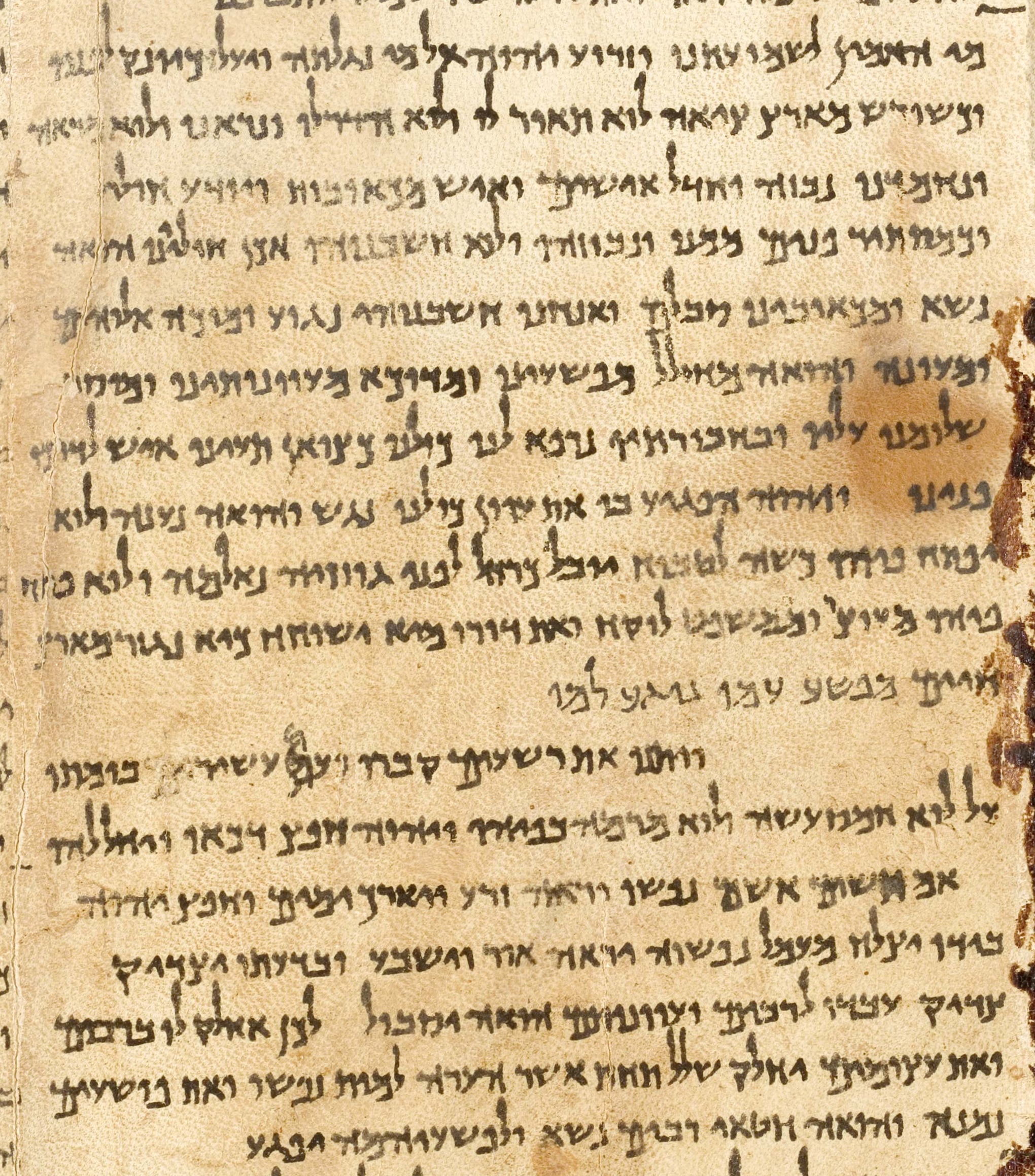
Isaiah 52:13–53:12 offers a different comparison. Its servant is humiliated, suffers undeservedly, bears the wrongdoing of others and is vindicated. The Great Isaiah Scroll contains this passage and is dated by the Israel Museum to about 125 BC. Its existence before Christianity is therefore well supported. Christians did not first compose this passage after Jesus’ death.
Isaiah 53:11, World English Bible: “My righteous servant will justify many by the knowledge of himself; and he will bear their iniquities.” This is the servant’s saving role in the poem; identifying him is a further question.
Why does that matter to Christianity? The passage gives earlier scriptural substance to the claim that God saves through a righteous sufferer rather than treating his suffering as the defeat of God’s purpose. Acts 8:26–35 explicitly connects the servant passage with Jesus. Paul’s received proclamation in 1 Corinthians 15:3–8 connects Jesus’ death for sins, burial and resurrection with Scripture. This is a concrete reason to examine the Christian account of salvation; it is more than finding a vaguely similar sentence.
Acts 8:35, World English Bible: “Philip opened his mouth, and beginning from this Scripture, preached to him about Jesus.” Acts supplies an explicit Christian interpretation, not a new date for Isaiah’s text.
Yet the scroll does not identify the servant for us. Isaiah elsewhere calls Israel God’s servant, while also describing a servant who restores Israel. Jewish interpretations include collective and individual readings; singular language alone does not eliminate a collective figure. Isaiah 53 names neither Jesus nor crucifixion nor a date. Its mention of offspring and prolonged days also needs explanation in a Christian reading. The interpretation must account for the whole passage. Some interpreters understand its death language as extreme suffering followed by recovery, rather than literal death and resurrection; that alternative also needs to be weighed.
There is a further historical objection: Gospel writers knew Scripture, so some reported correspondences could reflect how they told the story. We cannot count each such detail as an independent hit. Dating Isaiah before Jesus rules out one explanation—Christian composition of the passage after his death—but does not by itself establish every Gospel detail, Jesus’ resurrection or the saving meaning of his death. Those claims require their own evidence.
Why a catalogue cannot decide the question
The Bible’s cases need the same scrutiny. Daniel’s detailed visions are often dated by critical scholars to the crisis under Antiochus IV in the second century BC; defenders of an earlier date offer contrary literary arguments. A pre-Christian manuscript is not automatically earlier than every event described in it. Likewise, archaeological ruins do not by themselves establish that an ancient prediction meant the particular destruction being cited.
A fair comparison therefore cannot begin with fifty biblical successes against five Qur’anic ones unless every case has been defined and checked, disputed cases and misses included. Several details from one story may share the same source and interpretation. Multiplying imagined probabilities would give the appearance of measurement without a valid calculation.
Roger Beckwith, “Early Traces of the Book of Daniel,” Tyndale Bulletin 53/1 (2002), pp. 75–82 · Popović et al., 2025 manuscript-dating study, section 2.1 and Fig. 1 · Daniel 11, World English Bible
What follows for the larger claim?
Even an established prediction would not automatically authenticate everything taught by its speaker. The Bible itself distinguishes failure to fulfill a prediction from a successful sign that nevertheless directs people toward other gods: compare Deuteronomy 18:20–22 and 13:1–5. These passages belong to ancient Israel’s covenant law, including its severe penalties; the point here concerns discernment, not a prescription to punish religious disagreement.
The Roman passage therefore cannot settle Islam’s authority by a victory alone, and a disputed biblical example cannot settle Christianity by a matching list. For the Christian case, the positive question is whether Jesus truly embodies the servant’s costly rescue and vindication. The earlier text gives that question historical depth; the Christian testimony supplies a claim about its fulfillment. Reading Isaiah 52:13–53:12 beside Acts 8:26–35 lets us examine the connection without pretending that the age of the scroll has already decided it.
When a prophecy is presented as proof, ask for the exact passage, the evidence that it preceded the event, the proposed fulfillment and the strongest competing explanation. These requests do not make belief impossible. They show which part of the case is established and which part still carries the argument.