


Start with the right question
The historical case that Jesus died by crucifixion is strong. His followers’ belief that he rose from the dead also appears early. Those are different findings: an early report of a resurrection is evidence to examine, not the same thing as establishing that God raised someone. Nor does evidence that people worshipped Jesus, by itself, prove that Jesus is God.
You can investigate this without first accepting the Bible as inspired. A letter does not stop being an ancient document because it later became Scripture. The fair questions are when it was written, what its author could know, and how its claims compare with other evidence. Religious commitment calls for scrutiny; it does not automatically disqualify a source.
1 Corinthians 15:1–28 — early resurrection testimony · Helen K. Bond — The Trial and Death of Jesus
The earliest testimony matters
Paul wrote 1 Corinthians in the mid-50s CE, roughly twenty-five years after Jesus’ death. In 15:3–8 he passes on an account of Jesus’ death, burial, resurrection and appearances, including an appearance he claims himself. In Galatians 1:18–19 he also reports meeting Cephas, or Peter, and James, Jesus’ brother. We are dealing with a participant in the early movement who knew some of its leaders, not a story first invented centuries later.
1 Corinthians 15:3–4 (World English Bible Classic): “Christ died for our sins” and “he was raised on the third day”. This is the received account Paul reports, not independent verification of the events.
That does not give us five hundred separate witness statements: Paul’s reference to a group of more than five hundred is one surviving author’s report. The Gospel narratives supply more detail, but their relationships and differences require examination. Mark 15 describes Jesus’ execution under Pontius Pilate; Mark 16:1–8 narrates the discovery of an empty tomb. The empty-tomb account and the claim that God raised Jesus need their own assessment.
There is evidence outside Christian Scripture too. Tacitus, writing in the early second century, approximately 116 CE, says Christus was executed under Pilate during Tiberius’ reign (Annals 15.44). He was not an eyewitness, and his information source is uncertain. This is later corroboration, not a first-century Roman execution record.
Of Christus, Tacitus writes: “had undergone the death penalty in the reign of Tiberius, by sentence of the procurator Pontius Pilatus” (Annals 15.44; Loeb Classical Library, vol. V, 1937). These are the later historian’s words, not an eyewitness deposition.
What the Qur’an changes
Islam honors Jesus as Messiah and God’s messenger, while rejecting the Christian understanding of his divinity (Qur’an 4:171). Qur’an 4:157–158 rejects its opponents’ claim to have killed and crucified Jesus and says God raised him to himself. The usual Muslim reading is that Jesus did not die on the cross. Ibn Kathir’s commentary describes another person being made to resemble him; the Qur’an itself does not name a substitute. Ahmadi Muslims instead argue that Jesus survived crucifixion. These are different interpretations, not one account held by every Muslim.
Qur’an 4:157–158, in Mustafa Khattab’s The Clear Quran: “neither killed nor crucified him” and “Allah raised him up to Himself”. These excerpts contain the denial and raising; they do not identify a substitute.
A Muslim may answer that God can correct mistaken human testimony, however early it is. That is a serious claim about revelation. A later report is not false simply because it is later. But calling it a divine correction does not yet show that it is one. If neither scripture’s divine authority is assumed at the start, the early evidence for Jesus’ execution gives us a stronger historical basis than a later denial. Accepting that denial requires further grounds for trusting the claimed revelation. An appearance explanation could account for mistaken reports, but it also needs supporting grounds. A Muslim may offer reasons for trusting revelation elsewhere; those reasons need their own inquiry.

Early worship is a clue, not a shortcut
Around 112 CE, the Roman governor Pliny reported Christians singing to Christ as to a god (Letters 10.96). That puts such devotion long before Emperor Constantine. It does not tell us that every Christian understood Jesus identically, or establish what Jesus himself said about his identity. Paul’s Philippians 2:6–11 goes further: it speaks of Jesus in the form of God, then his self-humbling, death and exaltation. Christians read this as a positive basis for Jesus’ divine identity, while the passage distinguishes him from the Father. That interpretation needs its own argument, beyond Pliny’s report.
Pliny, Letters 10.96.7: “and sing a hymn to Christ as to a god” (our translation of carmenque Chrīstō quasi deō dīcere in the Latin text edited by Ashley Roman Francese, Dickinson College Commentaries). The wording describes the reported worship, not proof of Christ’s divinity.
Philippians 2:6, 11 (World English Bible Classic) speaks of Christ “existing in the form of God” and confesses “Jesus Christ is Lord, to the glory of God the Father”. The divine language and the distinction from the Father both belong to the passage under interpretation.
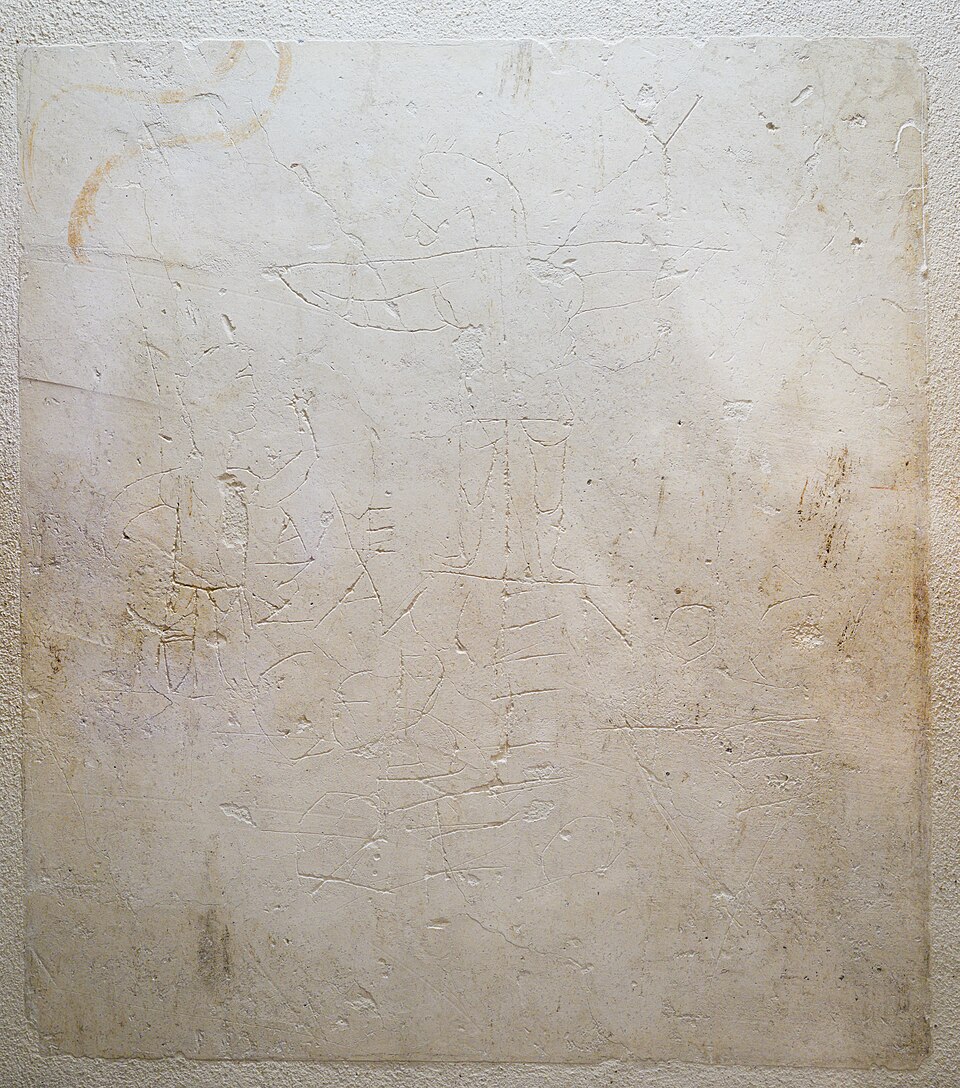
The Alexamenos graffito in Rome, dated by its museum to the late second or early third century, probably mocks a Christian worshipping a crucified figure. It illustrates how such devotion was perceived, not what Jesus looked like or whether that devotion was justified.
Christians understand the resurrection as God’s vindication of Jesus and the foundation of hope beyond death. Paul makes its importance explicit in 1 Corinthians 15:14–19: without it, the Christian message fails. But sincere belief, growth and suffering cannot by themselves establish a miracle. Nor would being raised from death automatically make a person divine; the Christian claim concerns who Jesus is as well as what happened to him.
Where the evidence leads
The Christian account deserves consideration because its central claim grows out of early testimony about an executed Jesus, not because a Roman official proved Christian theology. The historical difficulty for the mainstream denial of Jesus’ death on the cross is real; the further case for resurrection and divinity remains to be made. Read Mark 15 and 16:1–8 alongside 1 Corinthians 15 with these questions kept separate: what happened, what the first believers reported, and why we should accept their explanation. This allows the New Testament to be heard before a later claim to correct it decides the result.