


Begin with a complete passage, identify what it is saying, and then ask what reasons there are to believe it. A sentence spoken by a story's character, a parable and a claim about an event do different jobs; judging them as if they all made the same kind of claim can produce the wrong conclusion. Reading in context lets us examine the Bible's account of Jesus' welcome, self-giving and forgiveness without first accepting Christian authority. Some Muslim scholars, including Ibn Baz, restrict ordinary Muslims' Bible reading; this method is not a ruling on religious permission.
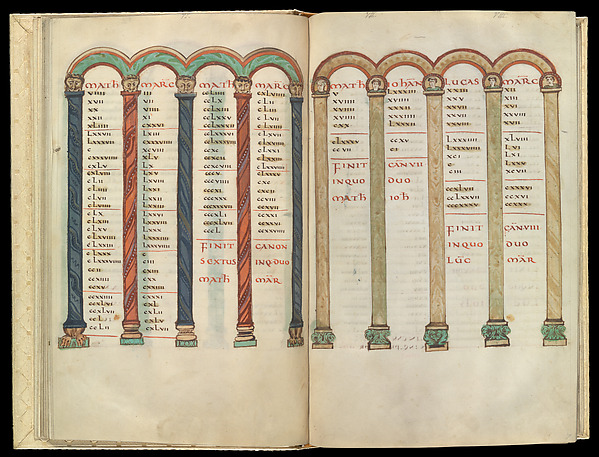
The Christian Bible has two main collections. The Old Testament contains Israel's scriptures, including law, narratives, prayer and prophecy. The New Testament contains four Gospels—Matthew, Mark, Luke and John—alongside Acts, letters and Revelation. A Gospel is an account of Jesus' ministry, death and resurrection, not a book Jesus wrote. “Testament” here means covenant: a relationship established by God's promises and requirements, not an earlier and later translation of the same book.
Jeremiah 31:31–34 — new covenant · Luke 22:14–20 — the Passover meal and covenant
Luke 15:1–32 shows how the method works. Read the opening scene: religious critics complain that Jesus welcomes sinners and eats with them. Jesus answers with parables, teaching stories. These stories explain his welcome; they are not presented as reports about an identifiable lost sheep or family. The complaint tells us what the stories are answering.
Follow the sequence. A shepherd finds a sheep; a woman finds a coin; a father receives a son who has wasted his inheritance. Jesus explicitly connects the first two stories with joy over repentance (15:7,10). In the third, the son returns and admits his wrongdoing. The father welcomes him before he can earn his way back. Yet the story continues: the older brother resents the celebration, and the father appeals to him too (15:25–32). Reading the whole passage shows a challenge both to wrongdoing and to refusing mercy to someone else. The older brother's refusal brings the opening complaint into the story: will the critics welcome someone else's return?
The opening complaint and the repeated joy at recovery support a precise conclusion: within Luke's account, Jesus explains his welcome of sinners through God's joy in their return. The passage gives concrete content to Christian talk about grace: restoration is received, not bought by the son's repayment. It does not teach that repentance is unnecessary, establish why Jesus' death is needed for forgiveness, prove his divinity, or independently establish that every Gospel report happened. Reading the whole scene gives us a definite claim to test and prevents us from making the story answer questions it does not address.
The next issue is how the two traditions understand revelation. Muslims understand the Qur’an as God’s speech revealed to Muhammad: Qur’an 9:6 speaks of hearing God’s word, and 26:192–195 describes revelation brought to the prophet through the trustworthy spirit. Christian belief can also affirm divine revelation through human writing: Catholic Catechism 105–106 describes God inspiring real human authors. These are claims to examine, not conclusions established merely by describing them.
The biblical and Qur'anic names for earlier scripture also need care. Qur'an 3:3 speaks of the Tawrat (Torah) and Injil (Gospel) as earlier revelation; 5:46 says God gave Jesus the Injil. These verses do not specify exactly how the Injil was recorded or collected. Believing in that revelation is not automatically accepting every statement in the four Christian Gospels. Qur'an 5:48 also gives the Qur'an authority in relation to earlier scripture; Ibn Kathir interprets this as confirming truth and judging disputed claims. That is a real disagreement about authority, not a reason to confuse the books.
If you are examining whether Islam is true, the Qur'an's authority to judge conflicting Gospel claims is itself part of the question. A Muslim may reply that there are already good reasons to trust the Qur'an; those reasons should be examined. What fails is treating disagreement with the Qur'an, by itself, as independent proof that a Gospel claim is false while the Qur'an's authority is precisely what is being tested. The same standard applies to simply assuming that the Bible is inspired.
Nor is the contrast “Islam has law, Christianity has mercy.” Qur'an 39:53–54 joins hope in God's forgiveness with returning and submitting to him. Jeremiah 31:31–34 joins God's new covenant with forgiveness and his law written within people. Both passages resist that simple opposition. A useful comparison asks how the texts connect repentance, mercy and God's action; it does not assign mercy to only one tradition.
To understand why Christians connect that mercy especially with Jesus, place the passage inside the Bible's larger story. Genesis 1 portrays God creating a good world; Genesis 3 portrays human disobedience, shame and exclusion from the garden. Exodus 20 gives the Ten Commandments after naming God as Israel's rescuer. Nehemiah 9:7–31 remembers God's dealings with Abraham, Moses and Israel: deliverance and law, repeated rebellion and judgment, yet continuing mercy. The question is therefore more than how to learn rules: how can people whose relationship with God is broken be restored?
The Christian answer centers on Jesus as more than a messenger. John 1:1–14 describes the divine Word becoming human; Philippians 2:5–11 presents his humility, obedient death and exaltation. This is not the Islamic position: Qur'an 4:171 affirms Jesus as God's messenger while rejecting divine sonship. Qur’an 4:157 also denies that Jesus’ opponents killed or crucified him. The New Testament’s claim is that God acts through Jesus to bring a salvation people cannot achieve merely by receiving further instructions. A Muslim can affirm the need for God’s mercy while rejecting a necessary saving death: Qur’an 2:37 describes God accepting Adam’s repentance. These differences must be examined, not assumed settled.
Christians connect this account with earlier scripture through different kinds of reasoning. Joseph, rejected by his brothers yet used to save their lives (Genesis 45:4–8), offers a pattern of rejection and rescue. That makes a comparison with Jesus intelligible; resemblance alone does not turn Joseph's story into a prediction.
Sacrifice supplies a different connection. Hebrews 10:1–18 interprets sacrifice and Jeremiah's new covenant through Jesus' self-offering. The source essay understands this as a substitute bearing sin's punishment, a Christian interpretation connected with Isaiah 53:5–6 and 1 Peter 2:24. These passages explain the textual basis of that saving claim; citing them does not by itself establish its truth or necessity.
Prophetic interpretation asks a further question: whom do the earlier texts describe? Acts 8:30–35 applies Isaiah's suffering-servant passage to Jesus; Daniel 7:13–18 supplies the imagery of enduring dominion that Jesus evokes in Mark 14:61–62. These are concrete Christian readings to assess, not proof that every biblical passage directly predicts him. Together, the pattern, sacrifice and prophetic hope explain why Christians connect forgiveness, suffering and victory in their account of Jesus.
A Muslim reader may recognize mercy in Luke while questioning whether it preserves Jesus' authentic teaching. The story's beauty cannot settle that historical question, and agreement about mercy does not settle the Gospels' authority or the need for Jesus' death. Its human narrative form alone does not establish that it is false either. These objections limit the conclusion: reading identifies the testimony that still needs testing. A reader who wishes may accompany that inquiry with prayer for understanding; neither an immediate experience nor religious agreement is a condition of sincerity.
Luke 1:1–4 — the narrator's stated method · Qur'an 39:53–54 — mercy and return · Qur’an 2:37 — Adam’s repentance accepted
Luke 22:19–20 connects Jesus' approaching death with a new covenant; Luke 24:44–48 presents his suffering and resurrection as scriptural fulfillment and connects them with forgiveness. Read beside Luke 15, these passages show why Christians join Jesus' welcome, self-giving and victory in one account of restoration. They do not independently prove that account true. They give the reader a specific testimony about the God Christians believe restores people through Jesus, rather than a collection of isolated lines.
The comparison with Islam can now be concrete. Qur'an 4:157 denies that Jesus' opponents killed or crucified him, while these Gospel passages give his suffering and resurrection a central saving meaning. What grounds justify accepting the Qur'an's judgment of that testimony, and what grounds support the Christian account? Calling one scripture authoritative cannot substitute for examining those grounds. Reading fairly opens the Christian testimony to consideration and exposes an untested assumption if it was being excluded only because it conflicts with the Qur'an. It does not decide the historical or religious conclusion in advance.
Luke 15:1–32 — lost sheep, coin and two sons · Qur'an 5:48; Ibn Kathir, abridged commentary on 5:48–50