


The Quran gives reasons to examine the Torah and Gospel, while also claiming authority to judge their contents. It affirms earlier revelation, appeals to teaching that earlier communities could consult, and criticizes some people's handling of it. Taken together, these statements support investigating particular biblical passages. They do not certify every sentence in a modern Bible or every Christian doctrine. This also lets us test a proposed biblical support for Muhammad's prophethood, rather than assume that an appeal to the Bible has already established it.
This question begins within Islam itself. Quran 4:136 requires belief in earlier revelation; 29:46 tells Muslims to acknowledge what was revealed to the People of the Book, the Jewish and Christian communities. But acknowledging a revelation leaves further questions: which surviving texts preserve it, what do they mean, and which commands remain binding? Those questions require evidence about the text in question, rather than a verdict on the Bible as an undivided whole.
Read the whole sequence
Quran 5:43 asks why people seek Muhammad's judgment when they possess the Torah containing God's judgment. Verses 44–46 describe Torah and Gospel as sources of guidance, with Jesus confirming earlier revelation. Verse 47 tells the Gospel's people to judge by what God revealed in it. These are meaningful references to revealed teaching, not a claim that earlier scripture contains nothing usable.
Then 5:48 describes the Quran as confirming earlier scripture and as muhaymin over it. The term carries a supervisory meaning: guardian, witness or authority. In his commentary, Ibn Kathir treats the Quran as the standard for judging earlier material. He also reads 5:47 either with reference to the Gospel community's own time or as obedience that includes following Muhammad. A Christian argument that stops at verse 47 misses this serious Muslim response.
Yet judging earlier teaching is different from saying there is nothing there to examine. Quran 3:93 asks for the Torah to be brought and read; 7:157 locates a description of the messenger in Torah and Gospel; 10:94 refers a hypothetical doubter to earlier scripture readers. An appeal to a text can be assessed only by identifying what it says. That is why these passages warrant investigation, even if their appeal concerns surviving truth within a larger disputed collection. They provide no list of approved biblical books.
Quran 10:37 also claims confirmation and explanation of scripture. Ibn Kathir understands this explanation in terms of rules and lawful and unlawful matters, not blanket approval of earlier copies. A further distinction matters: replacing a law does not mean falsifying its written text. Earlier scripture can remain useful evidence even when a Muslim regards its laws as superseded.
What does corruption mean?
The criticism of earlier communities must be read with the same care. Quran 3:78 concerns deceptive speech presented as scripture; 2:79 concerns writing falsely attributed to God for gain. In 5:13–15, distortion, neglected obligations and concealment also appear. Changing a text, misinterpreting it and hiding it are different acts. We should neither reduce every accusation to bad interpretation nor turn particular wrongdoing into proof that every biblical passage was replaced.
The Quran also distinguishes people: 3:113–115 praises an upright group, while 3:187 condemns concealment for profit. Ibn Kathir identifies the praised group with people who embraced Islam. Praise for some people does not establish that they preserved every word in every copy. Nor does criticism of others establish universal corruption. A useful historical claim names the passage, the alleged change and the evidence.
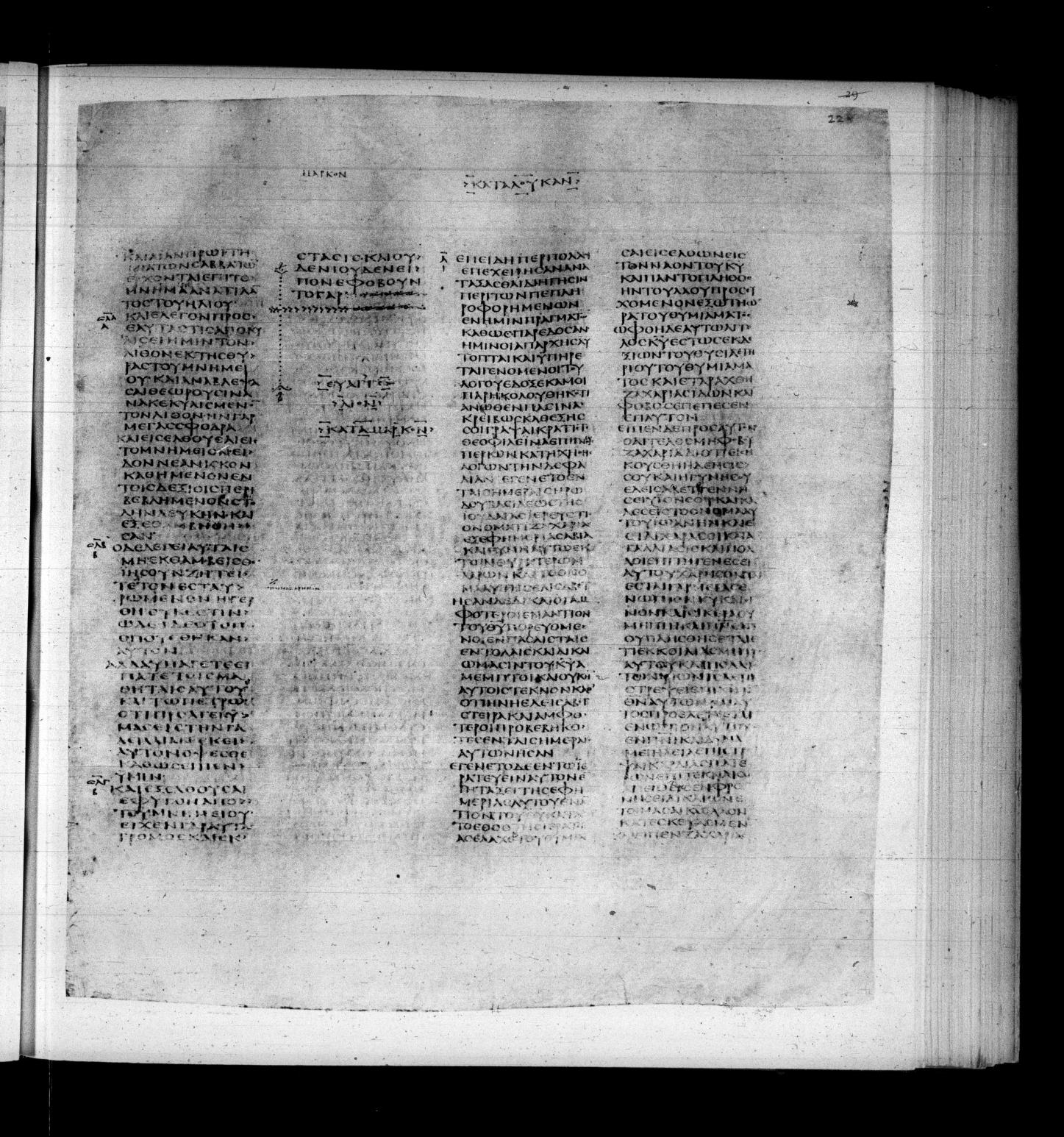
There are actual witnesses to investigate. The fourth-century Codex Sinaiticus preserves a Christian New Testament from before Islam, though it contains corrections and differs in details from modern editions. Its age shows that these writings were not all invented after Islam; it does not prove their divine origin or that every earlier stage of their transmission was unchanged.
We must also identify what is being compared. Injil is the Quran's term for the Gospel given to Jesus. Christians use Gospel for the good news and for accounts such as Matthew; their New Testament includes other writings as well. A comparison with Matthew can therefore examine a Christian account of Jesus without assuming that Matthew is identical to everything the Quran calls Injil.
Does John predict Muhammad?
One proposed fulfillment can be checked directly. The biography of Muhammad compiled by Ibn Ishaq uses material from John's promise of a Comforter to identify Muhammad. Yet John 14:26 names the Comforter as the Holy Spirit, and 15:26–27 connects his testimony with that of Jesus' disciples. In the received text, this is not a description of Muhammad as a later human messenger. Guillaume's translation of the biography, pages 103–104, also notes problems in the transmitted citation; it is not identical to the received Gospel.
A Muslim defense in IslamQA answer 10116 argues that the Comforter's later coming, further teaching and enduring presence fit Muhammad and his teaching. These similarities must also explain why Jesus says his hearers already know the Spirit (John 14:17) and will be reminded of what he told them (14:26). John 16:7 promises a coming after Jesus' departure, but a later mission does not require a previously unknown person. The narrative connects the promise with Jesus' present disciples and identifies the promised helper as the Spirit; citing later teaching alone does not overcome that context.
A Muslim can still challenge the received wording or defend divine correction through separate evidence. That reply must be assessed, not ruled out merely because it is later. But if conflicting words are rejected solely because the Quran must be right, the remaining selection cannot then independently prove the Quran right. This particular identification is not established by the citation; the received context weighs against it. That is a reason to question this claimed support for Muhammad's authority, not proof that every proposed prophecy fails. Quran 7:157 does not name John, and the wider case for Quranic authority remains a separate question.
A comparison you can actually make
Quran 5:45 recalls the Torah's law of proportionate retaliation. Leviticus 24:17–22 contains the corresponding rule for bodily injury and requires the same law for the foreigner and the native. Quran 5:45 also commends foregoing retaliation, so mercy is not absent from its teaching. This is a concrete correspondence with a biblical passage we can read. It is stronger evidence than merely repeating that the books agree, though it does not authenticate an entire collection.
Matthew 5:38–48 lets us examine how a Christian account relates Jesus to that earlier law. Earlier in the chapter, Jesus says that he fulfills the Law and Prophets (5:17). He takes up the retaliation formula and teaches nonretaliation, generosity and love for enemies. We can therefore compare an actual Torah rule with the Christian account of what fulfilling the law entails, rather than accept or reject the account from a label.
Jesus grounds this teaching in the Father's goodness: God gives sun and rain to good and evil people alike (Matthew 5:45). Loving only those who love us would not reflect that generosity. This offers a positive reason to consider the Christian understanding of God through Jesus: his call to love enemies has an intelligible basis in the character he attributes to the Father. Moral appeal alone does not prove divine authority, and mercy is not absent from the Quran. It does give the biblical account substance worth assessing on its own evidence.
A Muslim may accept surviving biblical truth while treating the Quran as its final judge. A Christian may ask whether that authority has itself been established and whether a particular biblical reading is well supported. That wider disagreement remains. Neither a weak objection to the Bible nor a favorable Quranic reference makes Christianity an automatic conclusion. The case here concerns evidence for inquiry, not an Islamic legal ruling about reading other scriptures.
Within those limits, the Quran's claims of confirmation, explanation and support in earlier testimony can be examined. For each claim, name the passage: what does it say in context, what did it mean before a proposed identification, and what evidence supports that reading? If an explanation is claimed, ask which difficulty it resolves. Genuine correspondence can support a claim; a demonstrated mismatch can count against it. A translation difference or an unsupported interpretation is not enough to decide the matter.
The comparison has now produced a specific result: the Comforter citation does not establish the proposed biblical support for Muhammad, while Matthew gives an account of the Father's goodness and Jesus' fulfillment that can be examined directly. That removes one claimed reason for subordinating this biblical testimony to Muhammad's authority; it does not settle every reason a Muslim might offer. Read the passage, check its transmission, and examine why its account of God should be believed. The Christian claim can then be considered through what Jesus teaches about the Father, rather than dismissed by an authority this particular argument has not established.
Quran 5:48; Ibn Kathir, abridged English tafsir · Quran 7:157 · Quran 10:37; Ibn Kathir, abridged English tafsir · John 14:26, King James Version · Matthew 5:17–48, King James Version