


A familiar story can carry a different claim
The Qur’an tells familiar stories differently because it presents its own account of God’s message, not a translation of the Bible. It describes itself as confirming earlier Scripture and exercising authority over it. A Muslim can therefore understand a difference as divine correction. But calling an account a correction does not establish that it is true; that authority needs reasons of its own.
Qur’an 5:48 describes the book as “a supreme authority on them” (Mustafa Khattab, The Clear Quran). This wording expresses the authority claim being examined.
Two examples help us examine the claim without assuming either that every difference is a mistake or that every similarity proves copying. Mary’s title raises a question of interpretation. Jesus’ clay birds provide an earlier, nonbiblical parallel. Neither example allows us to read Muhammad’s mind.

Why is Mary called Aaron’s sister?
In Qur’an 19:27–30, Mary returns carrying Jesus. Her people challenge her conduct and address her as Aaron’s sister. In Exodus 15:20, Miriam, the woman called Aaron’s sister, belongs to the story of Moses. It is natural to ask whether the Qur’an has confused two women from different periods.
Compare “O sister of Aaron!” in Qur’an 19:28 (Khattab) with “Miriam the prophetess, the sister of Aaron” in Exodus 15:20 (World English Bible). The surrounding narratives identify the two settings; the shared title is what needs explanation.
Yet Sahih Muslim 2135, a report in an authoritative Sunni hadith collection, records that very objection. Muhammad’s reported answer is that people were named after earlier prophets and righteous people. This offers a different explanation from making Jesus and Moses contemporaries. It does not, by itself, identify a particular brother of Mary.
The reported reply in Sahih Muslim 2135 refers to “Apostles and pious persons who had gone before them” (Sunnah.com English edition). It explains a naming practice, rather than supplying an independent record of Mary’s family.
Other Muslim explanations understand the title as an association with Aaron’s family or piety. Ibn Kathir’s commentary preserves these readings. The title is therefore a real interpretive question, but it is not a decisive proof that the Qur’an’s speaker mistook Mary for Moses’ sister. A fair comparison must address the explanation actually offered.
Jesus and the clay birds
Qur’an 3:49 describes Jesus forming a bird from clay, breathing into it, and its becoming alive with God’s permission. A related story appears in the Infancy Gospel of Thomas, a Christian writing outside the New Testament: the child Jesus makes clay sparrows and brings them to life. The familiar Greek version has twelve birds, a Sabbath dispute, and clapping and command rather than breathing. This is a close parallel, not an identical passage.
In Qur’an 3:49, the result is “a ˹real˺ bird—by Allah’s Will” (Khattab). In the Infancy Gospel of Thomas, First Greek Form, chapter 2, “And the sparrows flew, and went off crying.” (Alexander Walker, 1886). These are the respective narrative claims, not independent proof that the miracle occurred.
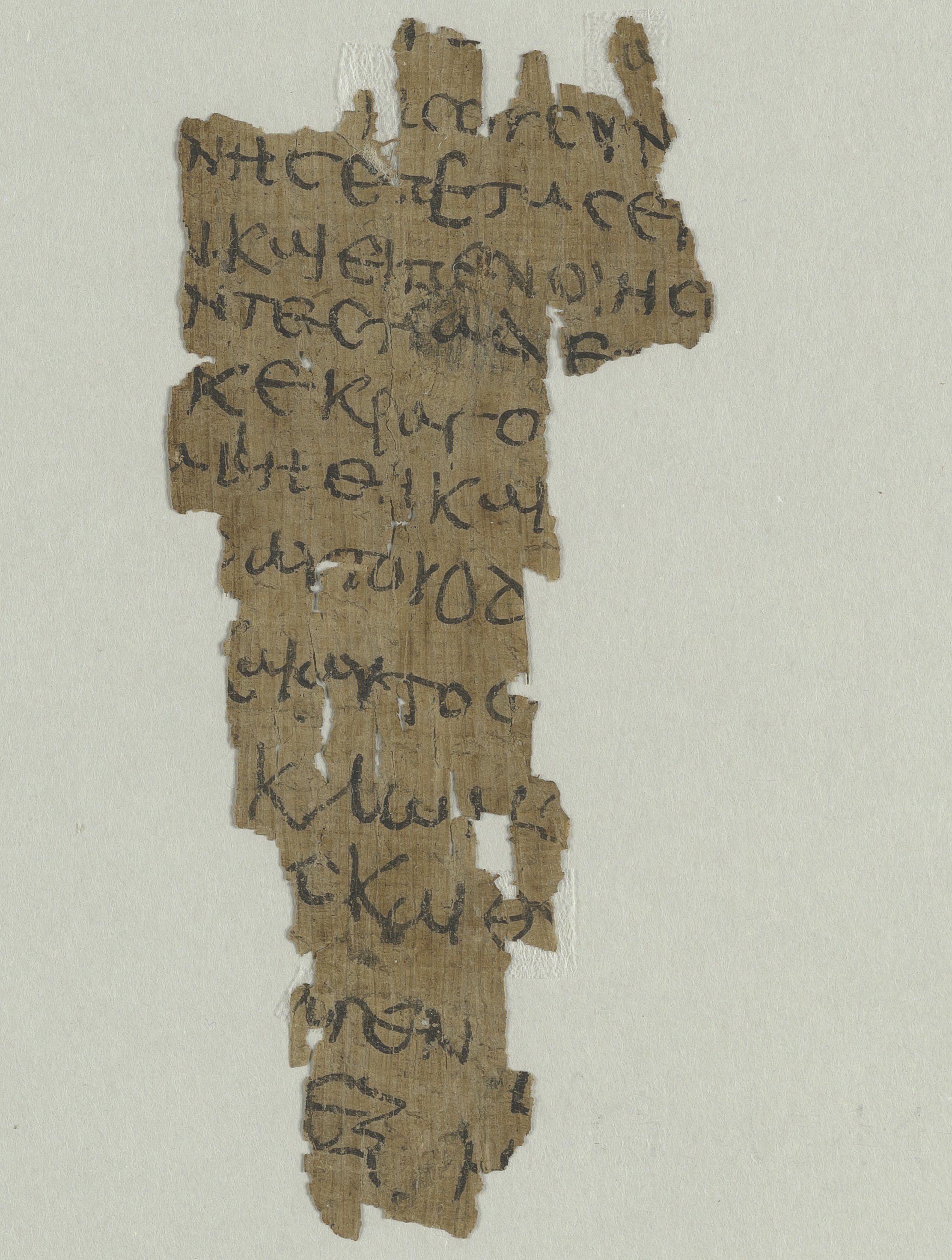
The earlier story is not merely a modern guess. Scholars published a papyrus fragment, P.Hamb.Graec.1011, in 2024 and dated its handwriting to the fourth or fifth century. It preserves part of the episode, well before Islam. That demonstrates the earlier existence of the tradition; it does not identify a book Muhammad read or a person who told it to him.
A Muslim may reply that God confirmed a true event preserved outside the Bible. That possibility is not disproved by an older story. Equally, the story’s appearance in the Qur’an does not independently prove the event happened. We must separate evidence that people told a story from evidence that the story is true.
What the comparison can establish
These examples give different results. Mary’s title has alternatives to a simple chronological mistake. The clay-bird story has demonstrable pre-Islamic circulation. The second finding makes comparison with earlier Christian storytelling necessary, but it does not establish direct copying, conscious deceit, or a numerical percentage of borrowed material.
The Qur’an also gives the bird miracle its own emphasis: Jesus acts with God’s permission. Similar material can serve different theological purposes. Identifying that purpose explains how the text uses a story; deciding whether its account comes from God requires a further argument.
Sahih Muslim 2135 — the naming explanation · Berkes and Nocchi Macedo (2024), P.Hamb.Graec.1011 · Qur’an 3:49 — clay and a living bird
Let the earlier Gospels speak
For someone weighing Islam and Christianity, the important question is whether the Qur’an has earned the authority to replace the earlier Christian portrait of Jesus. Shared names and miracles cannot establish that authority. Nor does a Christian answer improve by calling every extra-biblical story false merely because it is absent from the Bible. A Muslim may offer other reasons for accepting the Qur’an as revelation; these two comparisons cannot settle those arguments.
Luke begins his Gospel by describing investigation of traditions handed down by eyewitnesses. John explains that his selected signs invite belief in Jesus as Messiah and Son of God. These are concrete claims a reader can examine, not guarantees of historical accuracy. They give a positive reason to read the Gospels themselves: their account of Jesus deserves consideration on its own evidence, before a later account is allowed to redefine it.
Luke 1:2 refers to “those who from the beginning were eyewitnesses”; John 20:31 identifies the belief sought: “Jesus is the Christ, the Son of God” (World English Bible). The first passage states the claimed relation to testimony; the second makes the Christian purpose explicit. Neither quotation independently verifies its author’s claims.
Start with Luke 1 and John 20 alongside the Quranic passages. Ask what each text actually claims, what supports it, and why one should govern the interpretation of the other. Recognizing a parallel begins that inquiry; it does not finish it.